to enlarge

or choose the place
from the menu below
 Rome |
 Byzantium |
 Venice |
 Vienna |
 Brioni |
 Smrikve |
 |
 |
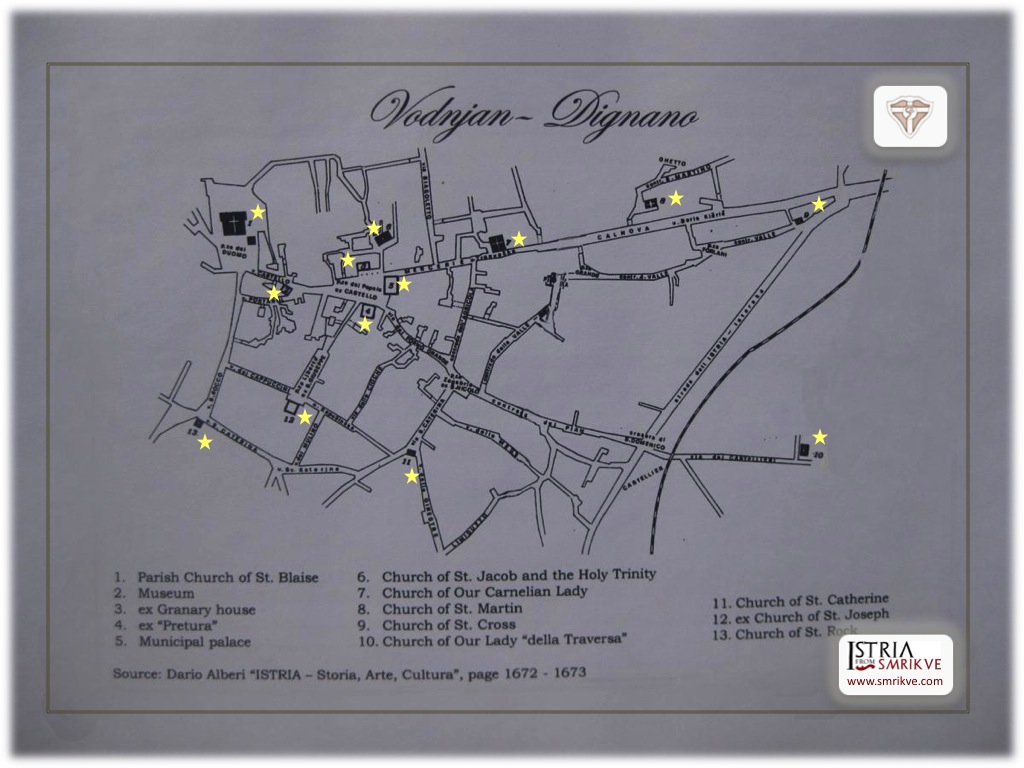
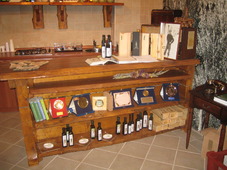
In one of the houses nearby the church of St. Rock you can taste one of the best Istrian olive oils made by family Belci.
 Istrian high quality olive oil producers are mainly the families that started to dedicate
more time to the olive oil processing at the end of the last century.
Istrian high quality olive oil producers are mainly the families that started to dedicate
more time to the olive oil processing at the end of the last century.
There are several families in Vodnjan that allowed Istria to return to the World stage as important quality olive oil producer such as: the above mentioned Belci family, Chiavalon family and Pastrovicchio family are only some of them that obtained high grades on the international fairs.
Istrian olive oil has millenniums long olive oil tradition. Romans were the first known Istrian olive oil producers and during the Roman Empire Istria had one of the best olive oils in the Empire. There were several millions of olive trees in Istria and Vodnjan area at the time was the heart of the Istrian olive oil production.
Marcus Valerius Martialis, native from Cordoba, who lived in the 1st century AD, during the Roman Empire times, celebrated Istrian olive oil with the following verses: “Uncto Corduba Laetior Venafro Histra Nec Minus Absolute Testa”. The translation would be: “Cordoba, you being more fertile than the olive oil region of Venafro and so perfect as the oil (amphora) from Istria”.
In Livio and Lorenzo’s Belci olive oil shop I leared from Mr. Livio Belci that Romans had five different olive oils quality ranking:
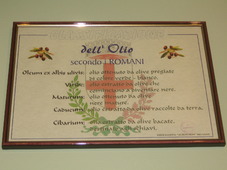 Most of the old knowledge returned to Istria in the last decades thanks to the families
mentioned below and some other Istrian families that you will find in the olive oil section.
Most of the old knowledge returned to Istria in the last decades thanks to the families
mentioned below and some other Istrian families that you will find in the olive oil section.
If you go back and take your car there is another building that is worth to be visited in the countryside of Vodnjan, few kilometres outside Vodnjan.
You have to take the old road towards Bale. Once you pass the indications towards Salvela village you will see the ruins of St. Francisco church on your left side. Just continue to follow this road and after few kilometres be careful in watching the indications for Santa Foska. The indications will show you to turn left.
After few kilometres you will arrive near one of the oldest countryside churches in Istria, the Church of St. Fosca.
The oldest part of the church dates back into 7th century and was several times expanded and restructured: in 9th, 12th, and 16th century.
It is quite a big building that in the past had an impressive porch. The porch was added in the 16th century. The frescoes paintings inside the church are probably from the mid of the 12th century and are quite unique for its artistic style in Istria because remind the Benedictine influence typical for the western Europe. Today only the columns with vaults are still there.
The area of Vodnjan is very rich with Istrian stone made countryside round houses named “kazun”.
There are over 2000 buildings of this type around Vodnjan. The biggest one are located in the area of Vodnjan: one in Galizana and two on the road towards St. Fosca.